
Top 10 IBC Tote Tank Manufacturers Worldwide?
Choosing a reliable ibc tote tank manufacturer requires more than comparing production volume or website claims. These containers support chemical, food, pharmaceutical, agricultural, and industrial supply chains. A weak decision can create leakage risks, handling delays, or avoidable replacement costs. This guide introduces ten manufacturers with established capabilities in design, molding, steel-frame fabrication, testing, and global distribution. Each company is considered through practical buyer concerns, not popularity alone. That distinction matters.
The review examines tank capacity, bottle consistency, cage strength, pallet design, valve options, and closure security. It also considers certifications, traceability, recycled-content policies, customization, and after-sales support. Experienced procurement teams usually request sample units, technical drawings, test reports, and clear shipping terms before placing large orders. Factory audits can reveal details that polished brochures miss, such as uneven welds, weak corner protection, or inconsistent labeling. Small details matter.
No manufacturer is ideal for every application. Food-grade storage may demand different controls from industrial liquid transport, while export buyers often need stronger documentation and regional service. Rankings can change with capacity, destination, budget, and compliance requirements. Some conclusions may remain provisional because public data is incomplete or updated slowly. That limitation deserves attention. Readers should verify current specifications directly with each supplier and consult qualified technical professionals before final selection. The goal is a practical starting point for comparing dependable global partners, reducing uncertainty, and matching the right ibc tote tank to real operating conditions.
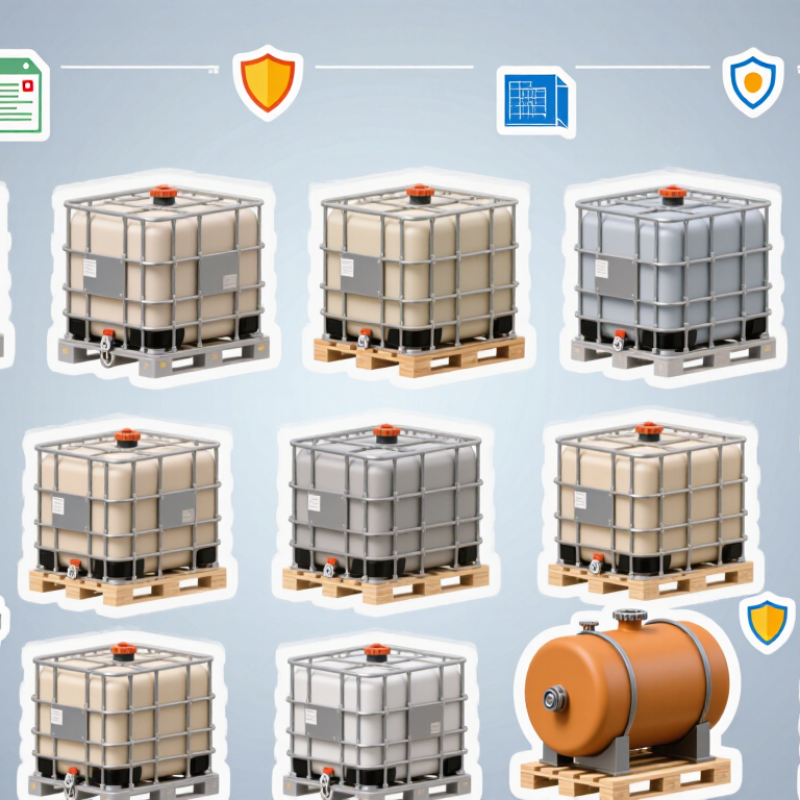
IBC Tote Tanks Defined: 1,000-L Capacity, UN Codes, and Core Applications
Top 10 IBC Tote Tank Manufacturers Worldwide?
An IBC tote tank is a rigid intermediate bulk container designed to hold large liquid volumes efficiently. The common format stores about 1,000 liters, or roughly 264 gallons. Its square footprint fits standard pallets and reduces unused warehouse space. A typical unit combines a high-density polyethylene bottle, a metal cage, a pallet base, and a top filling opening.
UN codes help identify approved packaging for regulated transport. For example, a marking such as UN 31HA1 describes a composite IBC with a plastic inner container and a rigid outer frame. The complete code still needs careful reading. Capacity alone does not prove compliance. Inspect the label, test date, closure design, and permitted contents before purchase. Details matter.
Core applications include water treatment chemicals, food ingredients, agricultural liquids, coatings, detergents, and industrial additives. Chemical compatibility is essential because temperature, concentration, and storage time can weaken plastic. A valve that works well with water may perform poorly with a solvent. It happens.
When comparing manufacturers, examine traceability, leak testing, resin quality, cage welding, and replacement-part availability. Ask for current technical documents, not only attractive product photos. Reconditioned totes may offer value, but previous contents can create contamination concerns. My practical view is simple: the cheapest container is not always economical. A failed valve, damaged pallet, or unreadable UN mark can interrupt an entire shipment.
| Profile | IBC Configuration | Nominal Capacity | Typical External Footprint | Typical Tare Weight | Primary Construction | Common UN Marking | Typical Outlet | Core Applications | Key Selection Considerations |
|---|---|---|---|---|---|---|---|---|---|
| 1 | Standard composite liquid tote | 1,000 L | Approximately 1,200 × 1,000 × 1,150–1,200 mm | Approximately 55–70 kg | High-density polyethylene inner bottle with galvanized-steel tubular cage and pallet base | Typically 31HA1, subject to design and certification | 50 mm or 2 in bottom valve | General chemicals, detergents, liquid additives, and industrial ingredients | Verify chemical compatibility, valve seal material, stacking rating, and certified maximum gross mass |
| 2 | Food-contact composite tote | 1,000 L | Approximately 1,200 × 1,000 × 1,150–1,200 mm | Approximately 58–75 kg | Food-grade HDPE inner container, corrosion-protected cage, and hygienic pallet | UN marking depends on the tested model; 31HA1 is common for liquid composite designs | 50 mm or 2 in hygienic valve | Edible oils, syrups, liquid sweeteners, flavorings, and food-processing liquids | Confirm food-contact compliance, cleanability, tamper evidence, and product-specific sanitation requirements |
| 3 | Hazardous-liquid transport tote | 1,000 L | Approximately 1,200 × 1,000 × 1,150–1,200 mm | Approximately 60–75 kg | UV-stabilized HDPE bottle with reinforced metal cage and tested closure system | Commonly 31HA1 for eligible composite liquid IBCs | 50 mm outlet with protective cap | Solvents, cleaning chemicals, water-treatment products, and regulated liquids | Use only within the exact UN-approved packing group, liquid density, pressure, and transport conditions |
| 4 | High-purity industrial tote | 1,000 L | Approximately 1,200 × 1,000 × 1,150–1,250 mm | Approximately 60–85 kg | Low-extractable polymer liner or bottle with controlled manufacturing and protected fittings | Certification varies by construction and intended transport use | 50 mm valve; sterile or protected options may be available | Electronic chemicals, specialty chemicals, laboratory fluids, and process liquids | Assess extractables, leachables, particle control, liner integrity, and closure cleanliness |
| 5 | Heavy-duty composite tote | 1,000 L | Approximately 1,200 × 1,000 × 1,160–1,250 mm | Approximately 65–85 kg | Thicker HDPE inner bottle, strengthened cage, and reinforced pallet structure | Model-specific UN marking; many liquid versions use a 31HA1 designation | 50 mm or 2 in industrial valve | Dense liquids, mineral products, construction chemicals, and industrial concentrates | Check density limits, forklift entry, bottom clearance, stacking load, and impact resistance |
| 6 | Stainless-steel reusable IBC | 1,000 L | Approximately 1,200 × 1,000 × 1,200–1,350 mm | Approximately 130–220 kg | 304 or 316 stainless-steel vessel with welded frame, skid, and reusable fittings | Metal IBC markings may include 31A, 31B, or 31N, depending on metal type and design | 50 mm or 2 in stainless-steel valve | Corrosive chemicals, high-purity liquids, pharmaceutical ingredients, and repeated-use logistics | Specify stainless-steel grade, surface finish, pressure rating, gasket compound, and cleaning method |
| 7 | Collapsible liquid IBC | Approximately 1,000 L | About 1,200 × 1,000 mm footprint; height varies by filled or folded condition | Approximately 45–80 kg | Flexible multilayer bag or engineered polymer container supported by a reusable frame | Transport certification is design-specific and must be confirmed for the intended liquid | Application-specific discharge port | Water-based products, food ingredients, agricultural liquids, and return-logistics programs | Evaluate puncture resistance, liner compatibility, aseptic requirements, and folding procedure |
| 8 | Insulated or temperature-managed IBC | 1,000 L | Approximately 1,250 × 1,050 × 1,250–1,450 mm | Approximately 80–150 kg | Composite or stainless vessel with thermal insulation, jacket, or removable protective cover | UN status depends on the pressure vessel, inner container, and tested outer design | 50 mm or 2 in valve, sometimes with heating or circulation connections | Resins, waxes, adhesives, chocolate, fats, and temperature-sensitive process liquids | Define operating temperature, heat-up rate, insulation performance, electrical safety, and cleaning access |
| 9 | Anti-static or conductive-process tote | 1,000 L | Approximately 1,200 × 1,000 × 1,150–1,250 mm | Approximately 60–85 kg | Static-dissipative or conductive inner container and grounding-compatible metal frame | UN marking is model-specific; electrical properties do not replace UN transport approval | 50 mm conductive-compatible valve | Flammable or combustible liquids handled in controlled industrial environments | Confirm surface resistance, grounding procedure, vapor controls, hazardous-area rules, and liquid flash point |
| 10 | Reconditioned composite IBC | 1,000 L | Approximately 1,200 × 1,000 × 1,150–1,200 mm | Approximately 55–75 kg | Inspected used cage and pallet with a cleaned or replaced inner bottle and verified fittings | Only the current, valid certification and marking for the specific unit may be relied upon | Typically 50 mm or 2 in valve | Non-critical industrial liquids, wash solutions, water treatment, and closed-loop operations | Inspect bottle condition, cage deformation, valve leaks, marking validity, service history, and cleaning records |
Related Posts
-
How to Choose the Right IBC Storage Tank?
-
2025 Top 10 Uses for 275 Gallon IBC Tote Tanks You Need to Know
-
Top 10 Benefits of Using IBC Storage Tanks for Your Business Needs
-
What Is a Tote Tank and How Is It Used?
-
Best Stainless Tanks for Your Global Sourcing Needs?
-
Top Tips for Choosing a Jacketed Stainless Steel Tank?
