How to Choose the Right IBC Storage Tank?
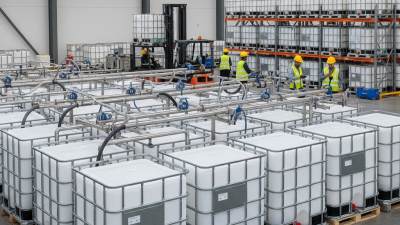
Choosing the right ibc storage tank requires more than comparing prices or visible capacity. The tank must suit the stored liquid, handling equipment, site conditions, and expected service life. A 1,000-liter container may look suitable, yet its valve position could conflict with your filling line. Small details matter.
Material compatibility is critical. High-density polyethylene works well for many industrial liquids, but not every chemical. Check the manufacturer’s compatibility data before purchasing. Inspect the inner bottle, steel cage, pallet, outlet valve, gasket, and vent design. These parts face different stresses during use. Consider whether forklifts can move the tank safely through doorways and around tight corners. Measure the complete unit, not only the bottle.
A tank is only useful when it fits the workflow. Think about filling speed, cleaning access, stacking limits, drainage, and spill control. Indoor storage may require different protection than outdoor storage. Temperature, sunlight, vibration, and uneven flooring can shorten service life. Certification and traceability also deserve attention, especially when transporting regulated materials. Confirm current local requirements with qualified professionals.
The cheapest option can become expensive quietly. Even experienced buyers miss small details. A neat spreadsheet cannot reveal every site problem. Review supplier testing records, warranty terms, replacement parts, and technical support. Ask for samples or drawings when the application is unusual. No choice is perfect. The practical goal is a safe, compatible, maintainable ibc storage tank that performs reliably in your actual operating environment.
Define Required Volume: Compare Standard 275- and 330-Gallon IBC Sizes
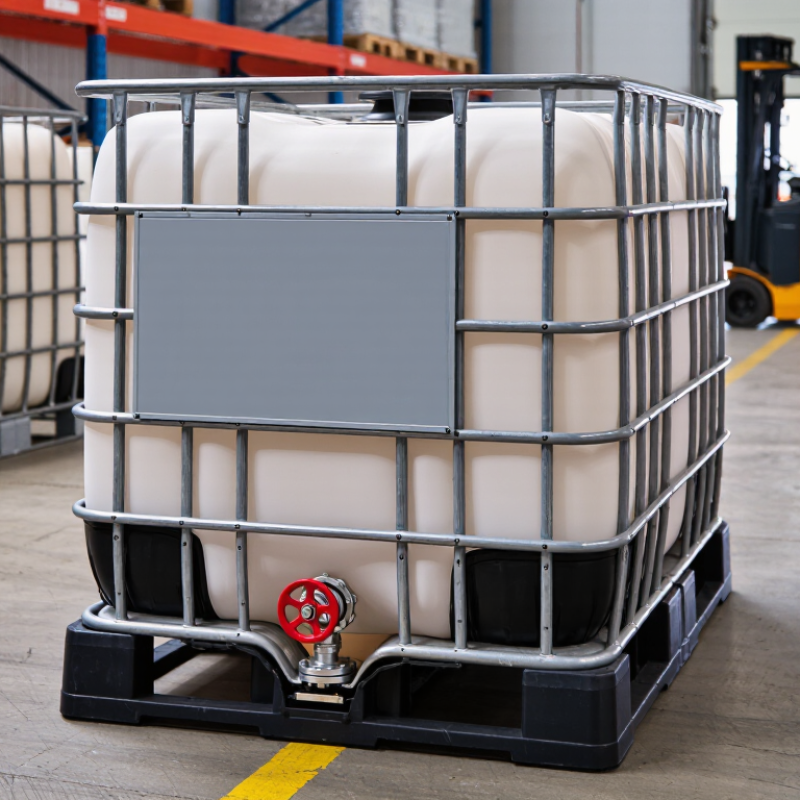
Choosing an IBC Storage Tank starts with defining the volume your operation actually needs. Standard 275-gallon and 330-gallon tanks are common choices, but capacity is only one factor. A 275-gallon tank may suit smaller batches, limited storage rooms, or frequent product rotation. The 330-gallon option provides 55 extra gallons, reducing refill frequency and supporting higher-volume production.
Physical space matters just as much. Measure doorways, aisle widths, loading areas, and the tank’s full height. Leave room for forks, hoses, inspections, and safe access around fittings.
A larger tank can improve efficiency, yet it may create handling problems in a crowded warehouse. Weight also increases with liquid density, not just tank capacity. Water-based contents are easier to estimate, while heavier liquids require careful load calculations. Check the tank specification and floor rating before ordering.
Tips:
Compare usable volume, not only stated capacity. Do not fill beyond the recommended level. Think about overflow space, temperature changes, and cleaning access. A 275-gallon tank may be safer for flexible storage. The 330-gallon tank may reduce labor over time. That shortcut can fail. Review your actual monthly usage, delivery schedule, and available equipment. When uncertain, ask a qualified storage or engineering professional to verify compatibility, dimensions, and safe handling requirements.
Match Tank Materials: Select HDPE, 304, or 316 Stainless Steel
Choosing an IBC storage tank starts with the stored material, not the tank’s appearance. In my experience, HDPE suits many water-based liquids, mild chemicals, and agricultural solutions. It is lightweight, corrosion-resistant, and easier to move around a facility. However, sunlight, heat, and harsh solvents can shorten its service life. Check the temperature range and chemical compatibility chart carefully.
304 stainless steel
304 stainless steel offers stronger mechanical performance and a smooth, cleanable interior. It works well for many food, beverage, and general industrial applications. Yet it may lose corrosion resistance around salt or chloride exposure.
316 stainless steel
316 stainless steel contains added molybdenum, giving it better resistance in marine, saline, and more aggressive environments. The upgrade is meaningful, but not automatically necessary.
Details matter.
Inspect the valve, gasket, welds, and frame material as well as the tank wall. A compatible tank can still fail when its gasket swells or its outlet corrodes. I once saw a selection focus only on liquid compatibility, while outdoor heat was ignored. That was a useful mistake. Before purchase, request material certificates, review cleaning conditions, and test a small sample when uncertainty remains. Also consider repeated handling, stacking, UV exposure, and the required discharge speed. A technically suitable material may still be impractical for daily operations.
Verify Regulatory Compliance: Check UN 31HA1 Certification for Dangerous Goods
How to Choose the Right IBC Storage Tank?
When storing regulated liquids, UN 31HA1 certification deserves close attention. This code identifies a composite IBC with a plastic inner receptacle and rigid outer enclosure. It is designed for liquid dangerous goods under specified conditions.
Do not rely on a printed UN mark alone. Ask for the current certificate, test reports, and construction details. Check the approval number, manufacturing date, maximum permitted gross mass, and applicable packaging group. The tank’s capacity must also match your handling equipment and storage plan. Small mismatches can create serious operational problems.
The liquid itself needs careful review. Confirm chemical compatibility with the inner liner, gasket, valve, and closure. Temperature, density, vapor pressure, and filling method may affect safe use. A tank approved for one substance may not suit another. Check the latest transport requirements for your country and shipping route, because acceptance rules can differ by road, sea, rail, or air transport.
Inspect the tank before filling. Look for cracks, whitening, deformation, damaged valves, and unreadable markings. Record the inspection, cleaning history, and previous contents. A certificate proves tested design performance, not perfect condition today. That distinction is easy to miss. When documentation seems incomplete, pause the purchase and consult a qualified dangerous-goods specialist or competent authority. Practical experience helps, but assumptions do not.
Calculate Handling Loads: Plan for Filled IBC Weights Above 1,000 Kilograms
How to Choose the Right IBC Storage Tank?
Calculate Handling Loads: Plan for Filled IBC Weights Above 1,000 Kilograms
Choosing an IBC storage tank starts with its filled weight, not its empty appearance. A 1,000-liter tank holding water already weighs about 1,000 kilograms. Add the tank, pallet, fittings, and residual contents. The actual handling load may exceed 1,050 kilograms.
Denser liquids create higher loads. Calculate the liquid mass by multiplying volume by density. Then add the tare weight shown on the tank documentation. Do not rely on rounded estimates. In practical site reviews, I have seen operators overlook a heavy plastic pallet or a few kilograms of residue. Small errors become serious during lifting.
Forklifts also create dynamic forces. Braking, uneven floors, and tilted forks can shift the load suddenly. Check the forklift’s rated capacity at the planned load center, not only its headline capacity. Inspect fork spacing, pallet condition, and the travel route before movement. The storage floor needs adequate strength for both total weight and concentrated contact points. A full IBC can press heavily through four small feet.
Leave a realistic handling margin. An engineer or qualified equipment specialist should confirm the required factor for your operation. Consider stacking height, temperature changes, liquid movement, and emergency access. A tank may look stable while its base is damaged or slightly uneven. That is easy to miss, and it deserves a second inspection before filling.
How to Choose the Right IBC Storage Tank? - Calculate Handling Loads: Plan for Filled IBC Weights Above 1,000 Kilograms
| Scenario |
Nominal IBC Capacity
(L) |
Estimated Tare Weight
(kg) |
Product Density
(kg/L) |
Filled Product Weight
(kg) |
Approx. Gross Weight
(kg) |
Planning Load with 25% Allowance
(kg) |
Recommended Minimum Rated Capacity
(kg) |
Handling Consideration |
| Water-based liquid |
1,000 |
55 |
1.00 |
1,000 |
1,055 |
1,319 |
1,500 |
A standard 1,000 L IBC filled with water exceeds 1,000 kg. Confirm that the pallet, floor, forklift and lifting attachments are rated for the gross load. |
| Low-density liquid |
1,000 |
55 |
1.10 |
1,100 |
1,155 |
1,444 |
1,500 |
Allow for the increased load caused by higher density. Check the container specification for the permitted filling level and operating temperature. |
| Moderate-density liquid |
1,000 |
55 |
1.20 |
1,200 |
1,255 |
1,569 |
1,750 |
Use equipment with sufficient capacity at the actual load center. Do not treat the nominal tank volume as the handling weight. |
| Dense liquid |
1,000 |
55 |
1.30 |
1,300 |
1,355 |
1,694 |
2,000 |
The higher center-of-mass and gross weight require careful forklift selection, stable travel and level storage. |
| Very dense liquid |
1,000 |
55 |
1.40 |
1,400 |
1,455 |
1,819 |
2,000 |
Verify that the IBC, pallet, rack position, lifting device and floor slab can all support the calculated gross and planning loads. |
| Water-based liquid |
1,250 |
65 |
1.00 |
1,250 |
1,315 |
1,644 |
1,750 |
A larger IBC can exceed 1,300 kg when filled with water. Check the tank, pallet footprint and access route before purchase. |
| Moderate-density liquid |
1,250 |
65 |
1.20 |
1,500 |
1,565 |
1,956 |
2,000 |
A 2,000 kg rated handling system may be appropriate only when its load chart, load center and operating conditions support the application. |
| Dense liquid |
1,250 |
65 |
1.30 |
1,625 |
1,690 |
2,113 |
2,500 |
For this load range, obtain an engineering review for floors, racks, ramps, lifting accessories and emergency handling procedures. |
Calculation basis:
Gross weight = filled product weight + estimated tare weight. Planning load = gross weight × 1.25. The 25% allowance is a planning factor, not a universal legal safety factor. Actual requirements depend on local regulations, the IBC design, pallet condition, lifting equipment load charts, load center, floor capacity, stacking method and the product being stored. Always use the manufacturer’s certified tare weight and the product’s measured or specified density for final selection.
Specify Valves and Access: Evaluate Common 2-Inch and 3-Inch Outlet Options
How to Choose the Right IBC Storage Tank?
Valve size is not a minor specification. It controls discharge speed, cleaning effort, and connection compatibility. A 3-inch outlet has 2.25 times the opening area of a 2-inch outlet, assuming equal geometry. However, actual flow also depends on liquid viscosity, head pressure, valve design, and hose length. Mordor Intelligence’s 2024 Intermediate Bulk Container Market Report projects market growth of roughly 6% annually through 2029, reflecting wider use across chemical, food, and industrial applications.
A 2-inch outlet suits many water-like liquids, standard transfer pumps, and moderate filling operations. It is usually easier to source matching hoses and fittings. Choose a 3-inch outlet when faster gravity discharge matters, or when the liquid contains suspended solids. The larger passage may reduce clogging, but it can increase spill volume during disconnection. That risk deserves attention.
I once treated outlet diameter as a flow-rate decision alone. That was incomplete. Check the valve seal against the stored liquid and operating temperature. ISO 16103 packaging guidance emphasizes material compatibility and safe handling for IBC construction. The access point matters too. A top opening should allow inspection, cleaning, and safe filling without forcing operators to reach awkwardly. Measure the available clearance before installation. A perfect outlet still fails if the valve cannot be reached, drained fully, or connected without twisting the hose. For repeat transfers, document the fitting type, gasket material, pressure rating, and cleaning method in the tank specification.
How to Choose the Right IBC Storage Tank?
A 2-inch outlet has a nominal diameter of 50.8 mm, while a 3-inch outlet has a nominal diameter of 76.2 mm. Based on circular geometry, the 3-inch opening provides approximately 2.25 times the cross-sectional area of the 2-inch opening, which can support higher potential transfer capacity when the valve, hose, fluid viscosity, and pumping conditions are suitable.
Select a valve and access arrangement that match the required flow rate, connection standard, cleaning method, and available clearance. Nominal dimensions do not guarantee actual flow because internal bore size and valve design vary.