
7 Best HDPE Water Tanks for Water Storage?
Choosing a reliable hdpe water tank is not simply a matter of comparing capacity and price. Storage conditions, water quality, tank design, sunlight exposure, and installation space all influence long-term performance. A 500-gallon tank may suit a small household, while a farm or commercial site may need several connected units. Bigger is not always better.
Peter Gleick, a leading water expert and co-founder of the Pacific Institute, has said, “Water is the most important resource in the world.” That principle makes tank selection more serious. A well-made HDPE tank should resist corrosion, remain stable outdoors, and protect stored water from unnecessary contamination. Food-grade materials, UV protection, strong fittings, and a practical access opening deserve careful attention. Small details matter.
This guide reviews seven of the best hdpe water tank options for water storage. Each choice is considered through useful, real-world questions: Does the tank suit the intended volume? Is cleaning straightforward? Can the base support its full weight? Are replacement parts easy to find? These questions can expose weaknesses that glossy product descriptions sometimes hide. Honestly, no single tank fits every property. Some models offer excellent durability but require more installation space. Others save room but provide fewer connection options. That trade-off is easy to overlook. Our comparison focuses on dependable construction, safe materials, practical design, and value over time, helping readers make a more informed decision before installation.
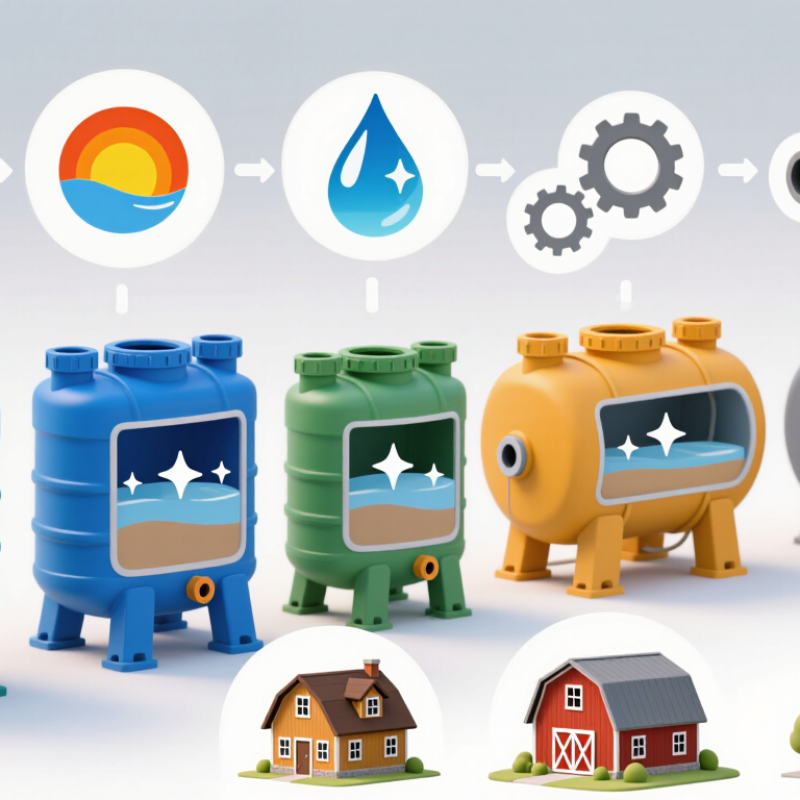
Understanding HDPE Water Tanks and Their Main Uses
HDPE water tanks are molded from high-density polyethylene, a tough plastic that resists corrosion, impact, and many common chemicals. Their main uses include rainwater harvesting, household backup supply, livestock watering, irrigation, and construction-site storage. The WHO/UNICEF Joint Monitoring Programme reported in 2023 that 2.2 billion people lacked safely managed drinking water in 2022. Reliable storage still matters.
For potable water, select a tank made for drinking-water contact and certified to NSF/ANSI/CAN 61 requirements. ASTM D1998 also provides guidance for vertical, rotationally molded polyethylene tanks. Opaque or UV-stabilized walls help reduce sunlight exposure and algae growth. However, “UV-resistant” does not mean maintenance-free. Keep the lid sealed, inspect fittings, and clean sediment regularly. A practical installation needs a level concrete base, safe overflow routing, and enough clearance for inspection. Never place a large tank on unstable soil.
Tank size should match daily demand, rainfall, refill reliability, and emergency needs. A larger tank is not automatically better. I have seen unused tanks collect sediment because owners ignored turnover. Water quality can decline when storage remains stagnant. In agricultural settings, separate tanks may be wiser than one oversized unit. Check wall thickness, outlet height, vent design, temperature exposure, and local installation requirements before purchasing. Small details matter. Mistakes happen.
7 Best HDPE Water Tanks for Water Storage? - Understanding HDPE Water Tanks and Their Main Uses
| Option | Tank Configuration | Nominal Capacity | Typical Dimensions (L × W × H) |
Approx. Empty Weight | Best-Fit Use | Main Advantages | Important Considerations |
|---|---|---|---|---|---|---|---|
| 1 | Compact vertical tank | 500 L (132 gal) |
Approx. 0.8 × 0.8 × 1.1 m | 20–35 kg | Small homes, gardens, balconies with suitable structural support, and emergency water reserves | Space-efficient footprint; easy to install; suitable for rainwater collection | A full tank weighs more than 500 kg, excluding the tank and fittings; confirm floor loading and access clearance |
| 2 | Standard vertical storage tank | 1,000 L (264 gal) |
Approx. 1.1 × 1.1 × 1.3 m | 35–60 kg | Household potable-water storage, rainwater harvesting, and small agricultural applications | Good balance of capacity, availability, and installation simplicity; rotationally molded HDPE is corrosion-resistant | Use a potable-water-rated tank and clean, covered plumbing components for drinking-water applications |
| 3 | Low-profile horizontal tank | 1,500 L (396 gal) |
Approx. 1.8 × 1.1 × 1.1 m | 55–85 kg | Locations with height restrictions, utility areas, cabins, and backup water systems | Lower overall height; broad base can provide good stability when installed on a level foundation | Requires more floor area; install on a continuous, level surface and follow the manufacturer’s support instructions |
| 4 | Large vertical household tank | 2,500 L (660 gal) |
Approx. 1.5 × 1.5 × 1.7 m | 80–130 kg | Whole-house non-potable supply, rainwater storage, and regular water interruptions | Provides a useful reserve without the footprint of very large commercial tanks; suitable for pump systems | A full tank may weigh approximately 2.6 tonnes; foundation strength, delivery access, and anchoring may be required |
| 5 | Slimline side-access tank | 3,000 L (793 gal) |
Approx. 2.4 × 0.75 × 1.8 m | 100–150 kg | Narrow side passages, urban properties, garden irrigation, and toilet-laundry water systems | Uses limited width efficiently; can be positioned along a wall or fence when local clearances permit | Check the tank’s actual width, inlet and outlet positions, wall clearances, and access for future cleaning |
| 6 | Agricultural and fire-reserve tank | 5,000 L (1,321 gal) |
Approx. 2.2 × 2.2 × 1.8 m | 180–280 kg | Livestock watering, crop irrigation, remote properties, and dedicated non-potable reserves | Large reserve capacity; HDPE does not rust and generally tolerates outdoor exposure when UV-stabilized | Large tanks need engineered foundations, safe delivery planning, overflow management, and appropriate pump sizing |
| 7 | Modular linked-tank system | 2 × 2,000 L (1,057 gal total) |
Approx. 2.4 × 1.2 × 1.6 m total footprint | 130–220 kg total | Expandable household storage, community facilities, workshops, and staged installation projects | Capacity can be expanded in stages; separate tanks may be easier to transport through restricted access | All tanks must be level and interconnected with correctly sized pipes, isolation valves, screened vents, and overflow protection |
Note: Dimensions and empty weights are indicative ranges for common rotationally molded HDPE tank configurations; actual specifications vary by wall thickness, shape, fittings, and manufacturer. One litre of stored water weighs approximately one kilogram, so the supporting base must be designed for the combined full-tank load.
Related Posts
-
Best HDPE Water Tank Suppliers in China for Global Buyers
-
How to Choose the Right Water Tank for Global Sourcing?
-
What Is a Polyethylene Water Storage Tank Used For?
-
Top 10 Best Water Supply Tanks for Reliable Water Storage Solutions
-

2026 Top Water Supply Tank Innovations and Trends to Watch?
-
Top Water Supply Tanks for Efficient Global Procurement?
