Skip to content
Menu

Best HDPE Water Tank Suppliers in China for Global Buyers

China has become a major manufacturing base for durable water-storage equipment. The 2024 Grand View Research report estimates that the global high-density polyethylene market reached approximately USD 80 billion in 2023. It also forecasts steady growth through 2030. This trend supports wider demand for the hdpe water tank, especially in agriculture, construction, aquaculture, and emergency water storage.

Reliable sourcing requires more than comparing factory prices. The World Health Organization and UNICEF reported that 2.2 billion people lacked safely managed drinking water in 2022. That figure makes storage reliability a practical concern, not a marketing phrase. A suitable tank should have consistent wall thickness, UV protection, food-contact documentation, secure fittings, and traceable quality inspections. Certificates help. They do not replace factory experience.

Tony Radoszewski, a recognized HDPE industry specialist and former president of the Plastics Pipe Institute, has emphasized that “installation quality is as important as material selection.” His point applies to tanks as well. Even a well-molded tank may fail when its foundation is uneven, its outlet is poorly supported, or its venting is ignored. We should admit one uncomfortable fact: no supplier is perfect in every category. Some excel at custom designs, while others offer stronger testing systems or faster export service.

This guide examines the best HDPE water tank suppliers in China for global buyers. It considers manufacturing experience, resin quality, molding technology, inspection practices, export capability, and after-sales support. The goal is not to promise a flawless purchase. It is to help buyers ask sharper questions before placing a large order.
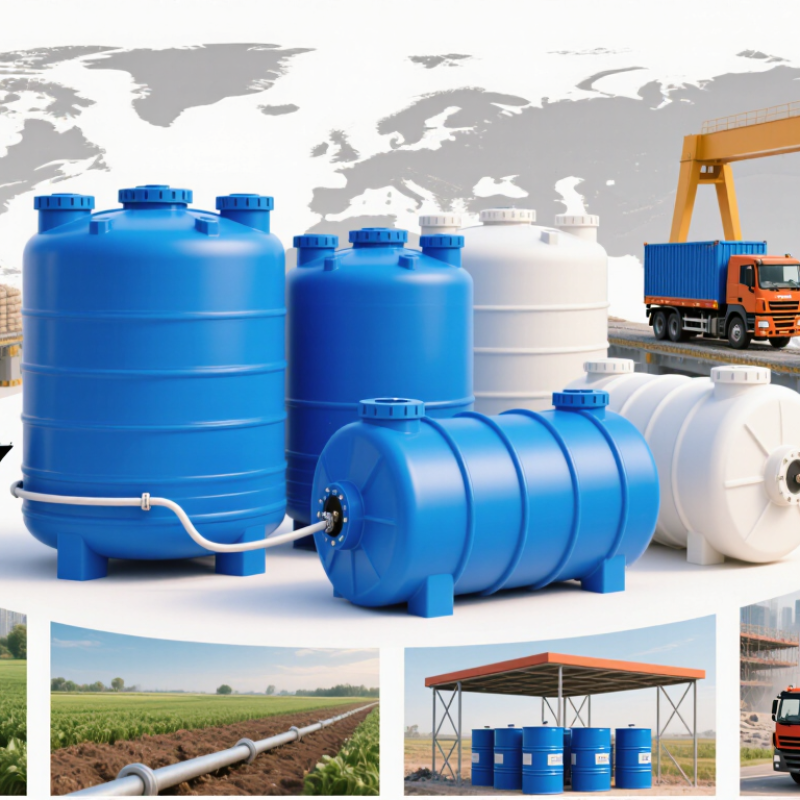
Best HDPE Water Tank Suppliers in China for Global Buyers

HDPE Water Tank Basics and Key Performance Features

HDPE water tanks are rotationally molded from high-density polyethylene. The material is lightweight, impact-resistant, and naturally resistant to many water-treatment chemicals. The WHO Guidelines for Drinking-water Quality stress that storage materials must not release harmful substances or alter water taste. Therefore, buyers should request food-contact compliance documents, resin specifications, and batch traceability.

Capacity is only one design factor. Wall thickness, rib geometry, lid sealing, and outlet placement affect service life. ASTM D1998 covers polyethylene vertical storage tanks and provides useful criteria for material, construction, and testing. UV stabilization also matters in exposed installations. Without it, sunlight can gradually embrittle the tank surface. A thicker wall is not automatically better. Poor molding can still create weak corners or uneven sections.

The WHO/UNICEF Joint Monitoring Programme reported that 2.2 billion people lacked safely managed drinking water in 2022. Reliable storage remains important for homes, farms, and emergency systems. In practice, inspect tanks for smooth interiors, stable bases, clean fittings, and clear markings. The UN World Water Development Report 2024 notes that agriculture accounts for roughly 70% of global freshwater withdrawals, making dependable farm storage especially valuable. One overlooked issue is installation. A strong tank can deform on an uneven foundation, and local temperature changes may increase stress. Performance depends on both manufacturing quality and site discipline.

Why China Is a Major Source of HDPE Water Tanks

China has become a major source of HDPE water tanks for global buyers. Its manufacturing base combines resin processing, rotational molding, and export logistics in one supply network. Practical procurement experience shows that this structure reduces coordination time and supports stable production schedules. Factories can produce vertical, horizontal, underground, and slimline designs for different installation spaces. Wall thickness, inlet size, fittings, and color are often adjustable before production. That flexibility helps farms, construction sites, homes, and commercial facilities. But customization needs careful drawings.

HDPE offers corrosion resistance, impact tolerance, and a smooth interior that limits residue buildup. Reliable producers use materials suitable for drinking-water applications when required. They should provide resin information, dimensional records, leak-test results, and batch traceability. Independent testing may confirm UV resistance, material safety, and structural performance for the intended use. Buyers should request these records instead of trusting polished photographs or broad claims. A tank can look excellent. Its documentation may not.

China’s ports, container services, and experienced export teams help move bulky tanks across continents. Some suppliers provide protective packaging, loading plans, and handling guidance to reduce deformation during transit. In practice, clear communication matters as much as factory capacity. Buyers should confirm lead times, mold fees, spare fittings, inspection steps, and after-sales support. Samples and factory audits can reveal surface consistency, wall uniformity, and fitting quality. No supplier is perfect. A cheaper tank may require more inspection, longer communication, or costly replacement parts. That trade-off deserves honest review before signing a purchase order.

Best HDPE Water Tank Suppliers in China for Global Buyers - Why China Is a Major Source of HDPE Water Tanks

Evaluation Dimension Verified Technical Data or Market Benchmark Why It Matters to Global Buyers Recommended Supplier Evidence Reference
Base Material High-density polyethylene generally has a density of approximately 0.941–0.965 g/cm³. The material provides a low-weight structure with good resistance to moisture and many common chemicals. Request the resin grade, technical data sheet, batch information, and material test report. ASTM D792
Manufacturing Method Rotational molding can produce a seamless, one-piece polyethylene tank body. Lids, valves, and fittings are normally installed separately. A molded tank body can reduce weld-related leakage risks and supports customized shapes and fittings. Ask for mold drawings, wall-thickness specifications, sample inspection records, and leakage-test procedures. ASTM D1998
Common Capacity Range Commercial HDPE water tanks are commonly offered from several hundred litres to tens of thousands of litres. Typical quotation points include 500 L, 1,000 L, 2,000 L, 5,000 L, 10,000 L, and 20,000 L. A broad capacity range allows buyers to source tanks for residential, agricultural, industrial, and municipal applications. Confirm nominal capacity, usable capacity, external dimensions, empty weight, and maximum liquid level. Supplier technical drawing and quotation documents
Capacity Conversion 1 cubic metre equals 1,000 litres. One US liquid gallon equals approximately 3.785 litres. Using a common unit system prevents capacity errors in international quotations and customs documentation. Require all drawings and commercial documents to state both litres and cubic metres where appropriate. NIST Unit Conversion Resources
Potable-Water Suitability HDPE itself does not automatically make a tank suitable for drinking water. The complete formulation, additives, fittings, and manufacturing process must meet the destination market’s requirements. Food-contact or potable-water approval is jurisdiction-specific and should not be assumed from the material name alone. Request applicable certificates, migration or extraction test reports, and confirmation that all wetted components are covered. NSF/ANSI/CAN 61
UV-Resistance Requirement Outdoor tanks require a UV-stabilized formulation and a color system appropriate for prolonged sunlight exposure. UV performance is not guaranteed by HDPE alone. Correct UV protection helps reduce brittleness, discoloration, and premature outdoor aging. Specify the intended climate, outdoor exposure period, UV additive information, and any accelerated-weathering test data. ASTM G154
Chemical Compatibility HDPE has broad resistance to water and many acids, alkalis, and salts, but compatibility depends on concentration, temperature, exposure time, and mechanical stress. A water tank design should not be reused for chemicals without a separate compatibility review. Provide the exact liquid composition, concentration, operating temperature, and cleaning chemicals before approval. Chemical Compatibility Guidance
Wall Thickness and Structural Design Tank strength depends on geometry, wall thickness, resin properties, temperature, support conditions, and liquid density. Nominal capacity alone does not determine structural performance. Two tanks with the same capacity may have different allowable fill heights and installation requirements. Request a sectional drawing, minimum wall-thickness data, base requirements, allowable operating temperature, and load limits. ASTM D1998
Fittings and Connections Common configurations include threaded or flanged outlets, bulkhead fittings, overflow ports, drain valves, access covers, and level indicators. Connection details must match local pipe standards and the buyer’s installation design. Confirm outlet diameter, thread or flange standard, fitting material, gasket material, location, and torque requirements. Approved engineering drawing and fitting schedule
Quality-Control Documents A reliable export order should have documented checks for dimensions, appearance, wall thickness, fittings, leakage, labeling, and packaging. Documented inspection reduces the risk of receiving products that differ from approved samples or drawings. Request a quality-control plan, pre-shipment inspection report, photographs, and retained sample policy. ISO 9001 Quality Management Principles
Export and Packaging Review Large tanks may be shipped as nested units, assembled units, or disassembled kits depending on their geometry and fittings. Actual container loading is product-specific. Packing efficiency can materially affect freight cost, damage risk, and the landed price. Obtain a packing list, package dimensions, gross and net weights, loading photos, Incoterms, and destination-port shipping assumptions. Approved packing specification and commercial invoice
Supplier-Selection Checklist The most relevant comparison points are material traceability, design drawings, production capability, quality records, compliance documentation, lead time, packaging, and after-sales support. A structured evaluation helps global buyers compare Chinese suppliers on total value rather than price alone. Use a weighted scorecard and approve the supplier only after sample validation and document verification. Buyer-developed technical and commercial specification

Note: Capacity ranges and configuration examples are common procurement reference points, not universal product specifications. Final suitability must be confirmed against the approved drawing, applicable local regulations, and the tank manufacturer’s technical documentation.

How to Evaluate HDPE Water Tank Suppliers in China

Evaluating HDPE water tank suppliers in China requires more than comparing quoted prices. Start with the tank’s intended use, capacity, installation site, and water-contact requirements. Ask for resin specifications, wall-thickness drawings, dimensional tolerances, and production photos. Reliable suppliers should explain how they control material consistency and welding quality.

Request independent test reports when the tank will store drinking water. Check whether the reports match the actual tank material, not only a similar product. Confirm UV resistance, impact strength, leak-test procedures, and fitting compatibility. A factory audit can reveal practical details, such as clean storage areas, calibration records, and labeled raw materials. Samples are useful, but a sample alone cannot prove stable mass production.

Review the supplier’s export experience, technical response time, packaging method, and after-sales process. Ask how damaged tanks are handled and who pays for replacement parts. Clear drawings matter. Vague answers often create installation problems later. One common mistake is choosing the lowest offer before comparing resin grade and tank thickness. That saving may disappear during freight or site repairs. No checklist is perfect. Leave room for verification, especially when documents look polished but production evidence remains limited. A dependable supplier accepts reasonable inspection, communicates limitations, and provides records that can be checked against the shipment.

Manufacturing Standards, Quality Control, and Certifications

Best HDPE Water Tank Suppliers in China for Global Buyers

Reliable HDPE water tank suppliers follow controlled manufacturing standards rather than relying on visual appearance alone. Many use food-contact-grade polyethylene, verified through resin documentation and batch records. Rotational molding requires steady heating, even powder distribution, and carefully controlled cooling. Small process changes can affect wall thickness and tank dimensions.

Quality control should begin before production. Inspectors may check resin certificates, mold condition, wall thickness, fittings, and UV stabilizer content. Finished tanks should undergo leak testing, dimensional inspection, and visual checks for warping, pinholes, or uneven surfaces. Practical buyers should request inspection reports, test methods, and sample records instead of accepting general promises.

Certifications need careful review. ISO 9001 can indicate a documented management system, but it does not automatically prove tank safety or long service life. Depending on the application, buyers may also ask for potable-water compliance, chemical-resistance data, and third-party laboratory results. Certification scope matters.

Details matter most.

Experienced suppliers can explain their testing frequency and corrective actions when a batch fails. A factory that admits occasional defects may be more credible than one claiming perfection. Still, every defect needs documented control. Before placing an order, global buyers should compare drawings, tolerances, material grades, warranty terms, and export packaging. A clear inspection plan reduces disputes when tanks arrive with damaged fittings or unexpected color variation.

Export, Customization, Pricing, and Buyer Support Considerations

For global buyers, selecting an HDPE water tank supplier requires more than comparing online prices. A capable supplier should explain material grades, molding methods, UV resistance, and expected service conditions. Ask for test reports, production photos, and previous export experience. Export experience matters. Confirm wall thickness, tank fittings, pallet loading, and container capacity before ordering. Some quotations look attractive until tooling, inland transport, or export documents create extra costs.

Customization may include tank capacity, inlet positions, outlet sizes, colors, logos, and reinforced bases. A proper drawing should show measurements, connection points, tolerances, and inspection standards. For unusual dimensions, request a sample or trial unit before mass production. Do not accept “food grade” as a vague promise. Require written material declarations and relevant compliance documents for your market. This is where careful buyers often save time. Yet, customization can increase minimum order quantities and production delays.

Compare pricing on the same basis: tank volume, resin quality, accessories, packaging, delivery terms, and inspection fees. Check minimum order quantities, lead times, payment conditions, and freight responsibility. A reliable export team should answer technical questions clearly and provide updated production schedules. Buyer support should continue after shipment, including installation guidance, replacement fittings, and damage-handling procedures. Still, support promises need testing. Send a detailed question before ordering and judge the response. One honest concern remains: the lowest price may reflect thinner walls or weaker fittings. A rushed decision can become an expensive water problem.