
Skip to content
Menu

How to Choose the Right Off Road Forklift for Your Needs?

Choosing the right Off Road Forklift begins with the worksite, not the brochure. Uneven ground, loose gravel, mud, gradients, and changing weather can challenge even powerful equipment. A forklift that performs well on a warehouse floor may struggle beside a construction trench. The wrong choice can waste fuel, slow production, and increase handling risks.

“Match the machine to the ground before matching it to the load,” advises Mark J. Rivers, a veteran rough-terrain forklift trainer. His point is simple, but often overlooked. Buyers should examine load weight, load dimensions, lift height, travel distance, tire design, ground clearance, and turning space. Engine power matters. So do hydraulic response, operator visibility, braking performance, and available attachments.

Small details become expensive later.

A farmyard may need flotation tires and strong mud performance. A construction site may require four-wheel drive, stabilizing features, and a compact turning radius. Stone yards may demand high capacity and reinforced components. These needs are not interchangeable. It is tempting to choose the largest model, yet excessive capacity can increase operating costs and reduce maneuverability.

A useful selection process includes real site measurements and realistic load tests. Speak with trained operators. Ask dealers for service intervals, parts availability, rated capacity charts, and operator training support. Do not rely only on advertised maximum capacity. Conditions change, and labels rarely describe every difficult surface.

This guide explains how to compare Off Road Forklift options with practical judgment. It also questions common assumptions. A perfect machine may not exist. The better goal is a safe, durable, and financially sensible match for your daily work.
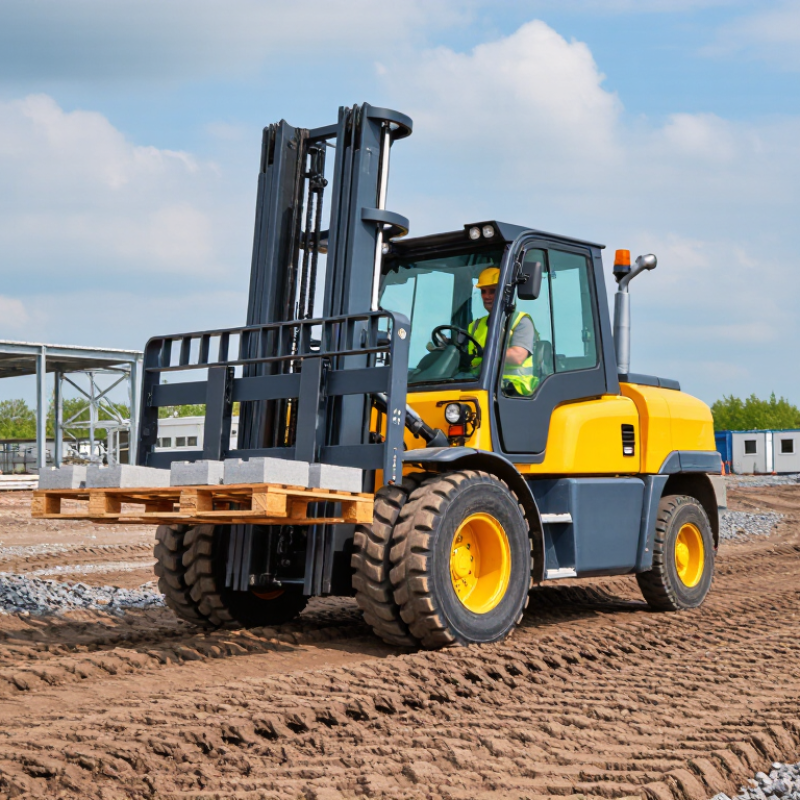
How to Choose the Right Off Road Forklift for Your Needs?

Define Your Jobsite Requirements and Operating Conditions

Choosing an off-road forklift starts with the jobsite, not the machine brochure. Map the surface first. Loose gravel, wet clay, steep ramps, and broken concrete demand different traction and stability. Measure the ground. Record maximum slope, travel distance, turning space, and the narrowest access point. A forklift rated for 5,000 pounds may not safely carry that load on uneven terrain or at full lift height.

OSHA’s Powered Industrial Trucks guidance links forklifts to about 85 workplace fatalities and 34,900 serious injuries each year in the United States. Those figures make operating conditions impossible to ignore. Define the heaviest load, its center of gravity, and how often loads move above shoulder height. Include pallets, pipes, cages, and unusual attachments in the calculation. Weather matters too. Rain can reduce braking control, while dust can limit visibility and damage filters. Check engine emissions requirements when work occurs near buildings or enclosed areas.

During a site assessment, mark pedestrian routes with cones and observe the busiest loading period. A quiet morning can hide dangerous congestion later. Leave room for counterweight swing and emergency stopping. One imperfect assumption can affect the entire selection. Recheck measurements with the actual load, not an idealized drawing. NIOSH also emphasizes training, visibility, and separation from pedestrians as core forklift risk controls. The right choice reflects the whole site.

Compare Off-Road Forklift Types, Capacities, and Lift Heights

Choosing an off-road forklift starts with the ground, not the brochure. Rough-terrain counterbalance forklifts suit muddy yards and uneven construction sites. Telehandlers add forward reach for placing loads over walls or onto platforms. Compact rough-terrain models work better in narrow, crowded areas.

Capacity is more than the number on the data plate. A 5,000-pound rating may apply only at a specific load center and low lift height. As the boom or mast rises, usable capacity can fall sharply. Check the manufacturer’s load chart at your actual reach, height, and attachment weight. The Industrial Truck Standards Development Foundation’s ANSI/ITSDF B56.6 standard provides testing guidance for rough-terrain trucks. Use it as a technical reference, not a substitute for site trials.

Lift height must match the highest landing point, with clearance for the load and overhead hazards. OSHA reports about 85 forklift-related workplace fatalities and 34,900 serious injuries annually in the United States. That figure covers powered industrial trucks broadly, but it shows why stability deserves attention. On a sloped gravel surface, a tall load can feel unstable before the alarm sounds.

Tips: Measure the heaviest load, its center of gravity, and the travel route. Test the machine fully loaded. I would not trust a capacity label alone. Ask operators where visibility fails; their feedback may expose a poor choice. Recheck the calculation when attachments change. Shortcuts are tempting. They are also expensive.

How to Choose the Right Off-Road Forklift for Your Needs?

Compare representative rated capacities and maximum lift heights across common off-road forklift types. Actual performance varies with load center, attachment, terrain, and operating configuration.

Compact rough-terrain forklifts suit lighter construction and agricultural work. Standard rough-terrain models provide balanced capacity and lift height, while telescopic rough-terrain forklifts are designed for greater reach. Heavy-duty models prioritize load capacity over maximum lifting height.

Evaluate Terrain Performance, Stability, and Safety Features

Choosing an off road forklift starts with the ground beneath its tires. Inspect loose gravel, wet soil, steep ramps, and uneven loading areas. A machine that performs well on packed dirt may struggle in deep mud. Large pneumatic tires, strong ground clearance, and responsive traction control can improve movement across changing surfaces. Test the forklift with a realistic load, not an empty frame.

Stability deserves careful attention. Check the load chart at different lift heights and driving angles. A wide stance may help, but it cannot replace correct load positioning. Keep heavy materials low and centered. Watch for frame sway when crossing a shallow rut. That detail matters. During a site assessment, mark hidden dips and soft edges before regular operations begin. I have found that familiar ground can still surprise experienced operators after rain.

Safety features should support disciplined driving. Look for reliable braking, clear visibility, seat restraints, warning alarms, and protective overhead structures. Hydraulic controls should respond smoothly, without sudden movement. Lighting helps in early morning work, but it does not solve poor visibility around a tall load. Operator training, daily inspections, and documented maintenance remain essential. A rushed inspection is better than none, yet it is not enough. Recheck tire pressure, forks, steering, and leaks before each shift. When possible, let operators test the forklift in the actual work area. Their feedback may reveal a stability problem that specifications overlook.

Choose the Right Power Source and Essential Attachments

Choosing the right power source starts with the worksite, not the purchase price. Electric forklifts suit enclosed yards, food facilities, and sites requiring low noise. Diesel or LPG models usually fit long outdoor shifts, steep grades, and rough ground. The International Energy Agency reported that global battery pack prices fell 14% in 2023, reaching about $139 per kilowatt-hour. However, battery cost alone does not reveal charging time, replacement expense, or productivity losses.

Electric trucks already represent roughly two-thirds of global industrial truck shipments according to World Industrial Truck Statistics data for 2023. That figure is useful, but it includes many indoor trucks. Rough-terrain operations require a different assessment.

Measure daily engine hours, slope conditions, mud depth, ambient temperature, and access to charging. A two-shift site may need spare batteries or opportunity charging. Sometimes, the “cleaner” option becomes impractical.

Attachments deserve equal attention. A side shifter helps align pallets on uneven ground, while fork extensions support wide loads. Clamps or rotators may improve handling, but each adds weight and changes the load center. The remaining capacity can drop sharply. Check the revised capacity plate and follow ANSI/ITSDF B56.6 guidance for rough-terrain forklifts. Never treat an attachment as a simple bolt-on accessory. A qualified supplier should verify stability, visibility, hydraulic flow, and tire clearance. I would also test the attachment with the heaviest real load, not a tidy showroom pallet. That small detail is often missed.

Check Maintenance Needs, Operator Comfort, and Total Cost of Ownership

Choosing an off road forklift starts with its working environment. Mud, gravel, slopes, and uneven ground place heavy demands on tires, axles, brakes, and hydraulic systems. Ask a service technician to inspect grease points, fluid access, filters, and daily inspection areas. If operators cannot reach these parts easily, routine maintenance may be delayed. Small delays become expensive repairs.

Maintenance should fit your actual schedule. Check how often the forklift needs lubrication, hydraulic inspections, tire replacement, and engine servicing. Review service records from similar machines, not only sales estimates. I once underestimated cleaning time after muddy shifts. That mistake affected the next morning’s inspection. A clear maintenance log helps reveal these practical costs.

Operator comfort also affects productivity and safety. The seat should reduce vibration across rough ground. Controls must feel predictable, even when the operator wears gloves. Good visibility, adjustable steering, secure steps, and simple warning displays matter during long shifts. Let several operators test the forklift before purchasing it. Their feedback may expose problems that specifications miss.

Total cost of ownership includes more than the purchase price. Calculate fuel or energy use, scheduled service, tires, repairs, training, insurance, and expected downtime. Consider how quickly parts can arrive in your region. A cheaper forklift may cost more when it sits unused for two days. My own preference is not always correct, so compare measured operating data with supplier claims. A practical trial often provides the clearest evidence.