Top 10 Benefits of Using Heated Mixing Tanks in Industries
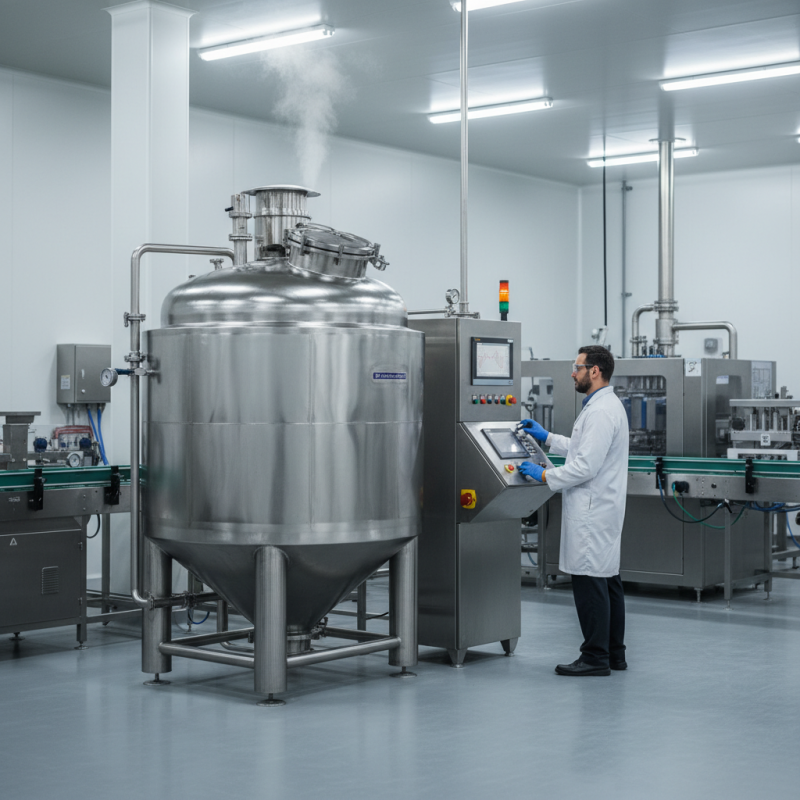
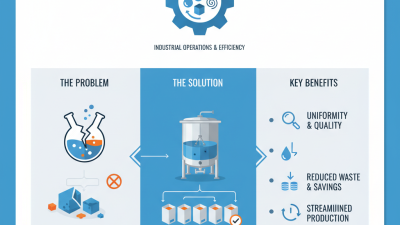
In today’s industrial landscape, efficiency and precision are paramount. A heated mixing tank is an essential tool that many industries rely on. This equipment offers numerous advantages that can streamline processes and enhance product quality.
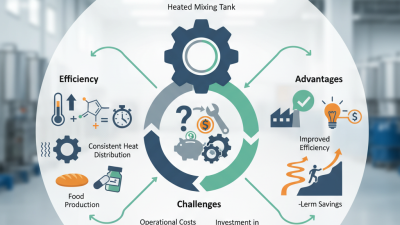
Maintaining the correct temperature is crucial for many mixing applications. A heated mixing tank ensures consistent heat distribution, which can lead to uniform mixtures. This feature is vital in industries such as food production and pharmaceuticals.
Moreover, using a heated mixing tank can drastically reduce processing times. When materials are heated effectively, reactions occur faster. However, not all tanks perform the same way. Some may lack insulation, causing energy loss. Businesses must choose wisely to avoid inefficiencies.
Advantages of Heated Mixing Tanks for Enhanced Product Quality
Heated mixing tanks play a vital role in various industries, significantly impacting product quality. An industry report suggests that using heated mixing tanks can improve product consistency by 30%. This consistency is crucial for industries like food production and pharmaceuticals, where precise formulations are necessary. The controlled temperatures help dissolve solids quickly and promote uniform mixing.
In chemical manufacturing, elevated temperature aids in achieving optimal reaction rates. A study indicated that reaction efficiency can increase by up to 25% when using heat. For example, resins and polymers often require specific temperature ranges during mixing. However, some operations may encounter challenges in maintaining these temperatures due to equipment limitations.
Moreover, quality control can be enhanced with precise thermal management. Using heated tanks reduces the risk of sedimentation and separation, which could lead to product defects. Yet, relying solely on heated mixers isn't foolproof. Some processes may still experience inconsistencies due to other variables. Manufacturers must monitor these factors closely to ensure quality is not compromised.
Top 10 Benefits of Using Heated Mixing Tanks in Industries - Advantages of Heated Mixing Tanks for Enhanced Product Quality
| Benefit |
Description |
| Enhanced Product Consistency |
Maintains a uniform temperature, ensuring consistent mixing and product quality. |
| Improved Solubility |
Heated tanks facilitate the dissolution of solids in liquids, enhancing mixing efficiency. |
| Faster Mixing Process |
Heated environments reduce the viscosity of materials, leading to quicker mixing times. |
| Energy Efficiency |
Modern heated mixing tanks are designed to maximize energy use, resulting in lower operational costs. |
| Quality Control |
Consistent heating leads to improved control over product attributes, enhancing overall quality. |
| Reduced Downtime |
Efficient heating reduces the time needed for setup and cleaning, minimizing production halts. |
| Versatility |
Can mix a wide range of materials, adapting to different industry requirements easily. |
| Enhanced Safety |
Controlled heating reduces the risk of thermal shock, improving workplace safety. |
| Scalability |
Easily adjustable to scale production up or down based on demand. |
| Better Homogeneity |
Ensures that the end product is homogeneous, which is vital in many industries. |
Impact of Controlled Temperatures on Chemical Reactions in Industries
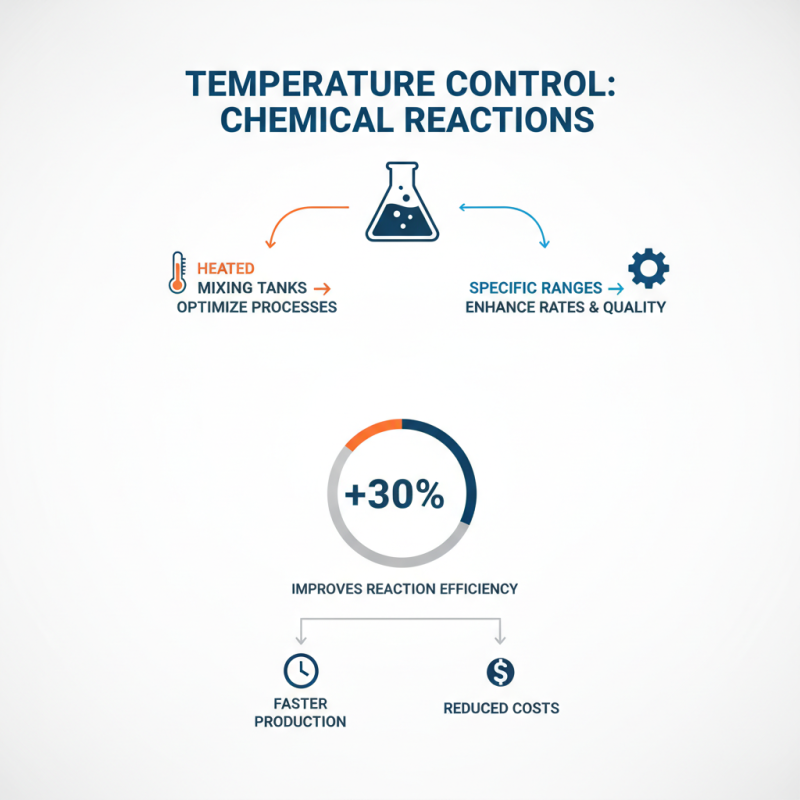
Controlled temperatures play a crucial role in chemical reactions. Many industries rely on heated mixing tanks to optimize these processes. Maintaining specific temperature ranges can enhance reaction rates and yield quality products. According to studies, optimal temperatures can improve reaction efficiency by up to 30%. This directly impacts production timelines and reduces costs.
In the pharmaceutical sector, for example, precise temperature control is vital. It helps in achieving the desired molecular transformations effectively. A report from the Chemical Engineering Journal highlights that temperature variations can lead to inconsistencies in drug formulations. Mixed reactions might create unwanted byproducts, risking product integrity.
Moreover, maintaining stability in temperature prevents overheating. Overheating can cause equipment damage or product spoilage. A recent survey indicated that over 40% of plants have experienced issues due to temperature fluctuations. This is a significant concern for both productivity and safety. Implementing heated mixing tanks could reduce these incidents, providing more controlled and consistent outcomes.
Energy Efficiency and Cost Savings with Heated Mixing Tanks
Heated mixing tanks are increasingly favored in various industries due to their energy efficiency. According to the Energy Information Administration, efficient mixing processes can reduce energy consumption by up to 30%. This is significant when considering the rising energy costs. Utilizing heated mixing tanks means less time is spent on heating materials. The integrated heating systems help achieve optimal temperatures faster, saving both energy and money.
Implementing these tanks often leads to noticeable cost savings. A study from the American Chemical Society found that companies can save approximately 15% on operating costs through better thermal control. Consistent temperatures result in improved product quality, which can reduce waste. This reliability cannot be overstated; businesses benefit from fewer reworks and more consistent output.
Tips: Regular maintenance can enhance performance. Always monitor heating efficiency. Invest in thermal insulation to minimize heat loss and save even more energy. Train staff to use heated tanks effectively, ensuring the operation remains efficient. Remember, even minor oversights can lead to increased energy usage and costs. Staying vigilant is essential for maximizing benefits.
Top 10 Benefits of Using Heated Mixing Tanks in Industries
Applications of Heated Mixing Tanks Across Various Industries
Heated mixing tanks find diverse applications across various industries, enhancing production efficiency and product quality. In the food industry, these tanks maintain optimal temperatures for sauces, dressings, and confectioneries. Precise heat control prevents the formation of unwanted lumps, ensuring a smooth product consistency. In pharmaceuticals, heated tanks facilitate the mixing of medicinal compounds, vital for creating effective medications.
Chemical manufacturing also leverages heated mixing tanks. They are essential for reactions requiring elevation in temperature. However, managing temperature stability poses challenges. Overheating can break down reactive materials, impacting product integrity. The right balance is crucial for success. In the cosmetic sector, heated mixing ensures consistent emulsification in lotions and creams. Consistency in texture plays a role in customer satisfaction.
Many industries benefit from these tanks, but they come with potential pitfalls. Maintenance is key to avoid contamination risks. Regular checks can prevent costly downtime. Unexpected failures can disrupt production cycles. Finding reliable practices for maintenance requires ongoing effort. Each industry must adapt their usage of heated mixing tanks to meet their specific needs.
Safety Enhancements Offered by Heated Mixing Tanks in Industrial Processes
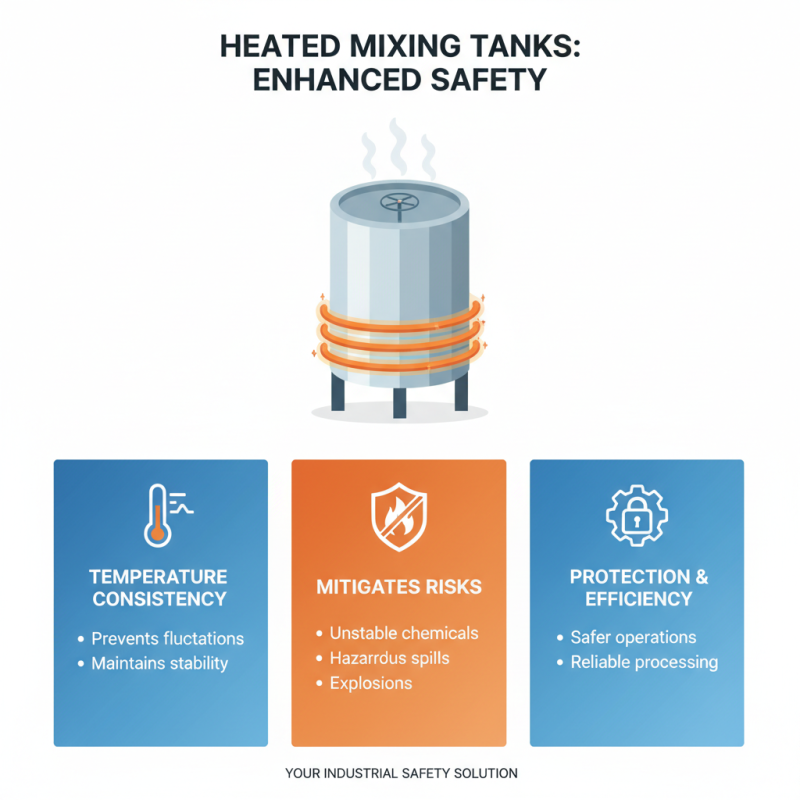
Heated mixing tanks play a crucial role in many industries, especially regarding safety. By maintaining consistent temperatures, these tanks help prevent dangerous reactions. For example, some chemicals can become unstable when not heated properly. This instability can lead to hazardous spills or explosions. Heated tanks minimize these risks effectively.
Moreover, these tanks encourage uniform mixing. When materials are heated adequately, they blend more efficiently. This reduces the chance of pockets of unreacted material. If left unchecked, these pockets can cause significant safety concerns. Regular monitoring of temperature ensures that the mixing process is safe.
However, not everything about heated mixing tanks is perfect. Operators must be trained correctly. Mistakes can lead to overheating or inconsistent mixing. This may result in poor product quality or safety mishaps. Continuous assessment of practices around these tanks is essential for improving overall safety. It’s important to learn from past errors to promote safer industrial operations.